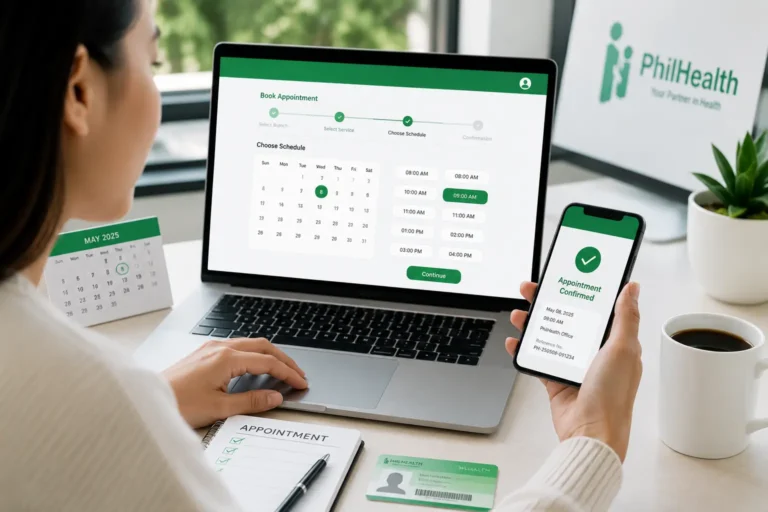
Getting your PhilHealth papers in order can feel confusing, especially with different rules for employed workers, self-employed individuals, students, and senior citizens. Many Filipinos end up making two or three trips to a PhilHealth branch simply because they brought the wrong document or missed one form.
This article breaks down every requirement you need, based on your situation, so you can finish your transaction on the first try.
Whether you’re registering for the first time, updating your Member Data Record, claiming maternity benefits, or replacing a lost ID, you’ll find the exact documents to prepare below. We also cover common mistakes applicants make and practical tips that save you time at the branch or online.users.
What Is PhilHealth and Why Requirements Matter
The Philippine Health Insurance Corporation, known as PhilHealth, is the government agency that provides health insurance coverage to Filipino citizens. Membership is mandatory under the Universal Health Care Law, which means every Filipino, regardless of income or employment status, should be registered under one membership category. Your PhilHealth number becomes your key to accessing subsidized hospital bills, maternity benefits, and other health packages.
Requirements exist because PhilHealth needs to place you in the correct membership type and confirm your identity before releasing benefits. A worker’s requirements differ from a retiree’s, and a newborn’s requirements differ from an adult applying for the first time. Preparing the right documents from the start prevents rejected applications and speeds up approval of claims later on.
PhilHealth Requirements by Member Category
PhilHealth groups members into several categories, and each one has slightly different document requirements. Below is a breakdown so you can quickly find your situation.
Employed Members
If you’re working for a company, your employer usually handles your initial PhilHealth registration as part of onboarding. New employees generally need to submit the following:
Your employer will submit these to PhilHealth along with the Employer Report (ER2) form, and monthly premiums are deducted directly from your salary and shared between you and your employer.
Self-Employed and Voluntary Members
Freelancers, business owners, and professionals without an employer fall under this bracket. You’ll need:
Self-employed members pay their own monthly contribution directly through PhilHealth-accredited payment channels, so budgeting for this cost every month is something to plan ahead for.
Overseas Filipino Workers (OFWs)
IOFWs are required to register or renew their PhilHealth coverage, often as part of the overseas employment certificate process. Requirements typically include:
Many OFWs settle their annual contribution in one lump sum before deployment, which keeps their coverage active while they’re abroad.
Unemployed Members (Non-Working Spouse, Informal Sector)
f you don’t have a formal job but want to maintain active PhilHealth coverage, you can register as a voluntary member. This category covers non-working spouses, informal sector workers, and individuals between jobs. You’ll need:
Non-working spouses may be included as dependents instead of paying separately, which is worth checking with your local PhilHealth office since it can save you a monthly contribution.
Indigent Members
Indigent members are those identified by the Department of Social Welfare and Development (DSWD) or local government units as qualified for subsidized coverage under the National Household Targeting System. Requirements usually include:
Because indigent membership is subsidized by national and local government funds, applicants don’t pay monthly premiums, though the certification process can take a few days depending on your city or municipality.
Senior Citizens
Filipinos aged 60 and above are automatically covered under the Republic Act 10645, also called the “no premium” law for senior citizens. To confirm or activate this benefit, seniors typically present:
Since coverage is lifetime and premium-free once activated, seniors mainly need to make sure their records are updated with PhilHealth to avoid issues when filing hospital claims.
Students
College and vocational students without an existing PhilHealth number, especially those with OJT or scholarship requirements, may register as dependents under a parent’s coverage or as individual voluntary members. Common requirements are:
Some schools require a PhilHealth number before internship placement, so it’s worth registering early in the semester rather than waiting until the deadline.
Persons with Disability (PWD)
PWDs may qualify for subsidized coverage depending on local ordinances and household income. Typical documents include:
Coverage details can vary by city, so confirming with your local PhilHealth office or PWD affairs office beforehand helps avoid confusion about which category applies to you.
Valid IDs Accepted by PhilHealth
PhilHealth accepts a wide list of government-issued identification documents, and having at least one on hand speeds up almost every transaction. Commonly accepted IDs include:
If you don’t have any of these yet, a barangay certification combined with a birth certificate can sometimes serve as a backup, though this depends on the branch and the transaction type, so calling ahead is a good idea.
Step-by-Step Process to Register and Get Your PhilHealth ID or Number
Bringing incomplete documents is one of the most common reasons people get turned away even after successfully booking a slot. Prepare these basics regardless of which transaction you’re booking for.
Accomplish the PMRF
Download the form from the PhilHealth website or get a copy at any branch.
Prepare your valid ID and supporting documents
based on your membership category above.
Submit your application
either online through the PhilHealth Member Portal or in person at a local branch.
Wait for your PhilHealth Identification Number (PIN)
which is usually released immediately for online applications or within the same day at a branch.
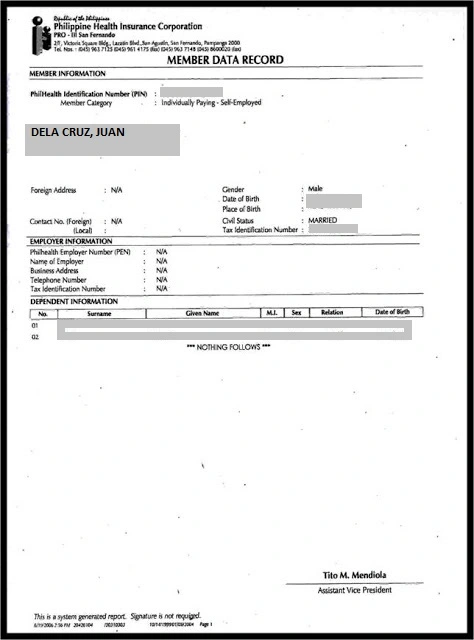
Print or request your Member Data Record (MDR)
which serves as proof of registration until your physical ID is issued.
Once registered, keep a copy of your MDR both as a printed copy and a saved file on your phone, since many hospitals and clinics ask for it during admission.
Requirements for Online PhilHealth Registration
Registering online through the PhilHealth Member Portal has become the faster route for many applicants, particularly first-time members without an existing PIN. To complete an online registration, prepare:
After submitting the online form, you’ll receive a confirmation email along with your PIN, though some transactions like updating civil status or adding dependents may still require an in-person visit or document upload through the portal’s online services.
After receiving your PIN, you can apply for or claim your PhilHealth ID when required.
PhilHealth Requirements for Adding or Updating Dependents
Adding dependents lets your spouse, children, or qualified parents access your PhilHealth benefits without registering separately. The requirements depend on the relationship:
|
Dependent Type |
Required Document |
|---|---|
|
Legal spouse |
Marriage certificate |
|
Children (legitimate) |
Birth certificate |
|
Children (illegitimate) |
Birth certificate with acknowledgment |
|
Adopted children |
Adoption papers |
|
Parents (60 years old and above) |
Birth certificate showing filiation |
|
PWD dependents (regardless of age) |
PWD ID and proof of relationship |
You’ll also need to accomplish the PMRF update form, and submitting certified true copies rather than photocopies of civil registry documents avoids back-and-forth requests from the processing officer.
PhilHealth Requirements for Changing Status or Updating Records (MDR)
Life changes such as marriage, a new job, or moving to a new address all require an MDR update so your PhilHealth records stay accurate. For most status changes, you’ll need:
Keeping your MDR current matters because outdated records can cause delays when hospitals verify your eligibility for benefits, especially during emergencies when time is limited. If someone else will process your request, prepare a PhilHealth Authorization Letter together with the required IDs.
PhilHealth Requirements for Maternity Benefit Claims
Expecting mothers need to meet specific conditions before PhilHealth releases maternity benefits. In general, applicants should have:
Hospitals that are PhilHealth-accredited typically handle claim filing directly, so most of your job as a patient is making sure your contributions are updated and your MDR reflects accurate information before admission.
PhilHealth Requirements for Hospitalization and Reimbursement Claims
For regular hospital confinement, PhilHealth requirements are usually split between what the hospital submits and what the patient provides. As a patient, prepare:
If you’re filing a reimbursement claim after paying out-of-pocket at a non-accredited facility or due to delayed processing, you’ll additionally need official receipts, a certificate of employment (if employed), and the PhilHealth Claim Form 1 signed by you and your employer or the hospital’s authorized representative.
PhilHealth Requirements for Lost ID Replacement
Losing your physical PhilHealth ID is common, but replacing it is straightforward. You’ll need:
Many branches now issue a printed MDR instead of a plastic ID card since this serves the same purpose for most hospital transactions, so ask your branch whether a physical card is even necessary for your situation.
How Much Are PhilHealth Contributions
Contribution rates are based on a percentage of your monthly income, with a set floor and ceiling. Employed members split this rate with their employer, while self-employed, voluntary, and OFW members shoulder the full amount themselves.
Rates are periodically adjusted through PhilHealth circulars, so checking the current premium table on PhilHealth’s official website before making a payment prevents underpayment, which can cause your contribution record to appear incomplete.
How Long Does PhilHealth Processing Take
Registration for a new PIN is usually completed within the same day, whether done online or at a branch, since the system generates numbers instantly once your information is validated.
Updating your MDR or adding a dependent typically takes a few days to a couple of weeks, depending on branch volume and whether your submitted documents need further verification.
Claims processing, particularly for reimbursements, can take anywhere from a few weeks to a couple of months, so keeping copies of everything you submit helps you follow up efficiently if a claim is delayed.
Common Mistakes That Delay PhilHealth Applications
A lot of applicants run into delays because of small, avoidable errors. Here are the ones that come up most often:
Double-checking your documents against your birth certificate before submission catches most of the
Tips for a Smooth PhilHealth Transaction
Bringing photocopies of every document, not just the originals, saves time since many branches require both. Checking the PhilHealth branch’s operating hours and current queueing system online before heading out also helps you avoid long waits, particularly during the first week of the month when many members pay contributions. If you’re transacting for a family member, bringing a simple authorization letter along with your own valid ID prevents the branch from turning you away for lack of proof of relationship.
Keeping a digital folder of scanned copies of your PMRF, MDR, birth certificate, and valid IDs on your phone means you’re never caught without a document, whether you’re at a hospital admission counter or a PhilHealth branch. It’s also worth registering for a PhilHealth online account early, even if you don’t need it right away, since it becomes useful the moment you need to check your contribution history or file an inquiry.
Frequently Asked Questions

I’m Dayon, and I run PhilHealthPH.com. I got tired of confusing, outdated instructions every time I had to deal with PhilHealth online, so I started writing the guides I wished existed — clear, current, and focused on actually getting the task done. Everything here is checked against PhilHealth’s official site and updated whenever their process changes.