
What Is a PhilHealth Contribution?
A PhilHealth contribution is the regular premium you pay to the Philippine Health Insurance Corporation so you and your registered dependents stay covered under the National Health Insurance Program. Every peso collected goes into a shared fund that pays out when members get hospitalized, undergo surgery, give birth, or need treatment for illnesses such as cancer, kidney disease, or tuberculosis.
The amount you owe is not fixed for everyone; it depends on your monthly salary or declared income and on which membership category you fall under. Paying consistently keeps your coverage active, while gaps in payment can delay or reduce the PhilHealth Benefits you’re eligible to claim when you need medical care.
Unlike a private insurance premium that varies by provider, PhilHealth contributions follow one nationwide schedule set under Republic Act No. 11223, known as the Universal Health Care Act. This law mandated a gradual yearly increase in the premium rate from 2019 onward until it reached its final ceiling. Knowing exactly where you stand on this schedule helps you budget correctly and avoid surprises on your payslip or during voluntary payment.
Who Is Required to Pay PhilHealth Contributions?
Membership and contribution payment are mandatory for employed workers, self-employed individuals, professionals, household helpers (kasambahay), and land-based and sea-based overseas Filipino workers, while senior citizens, indigents, and other subsidized groups are covered without paying premiums themselves.
PhilHealth groups its members into a few broad categories, and each one has slightly different payment rules.
If you fall under more than one category during the year, such as transitioning from employment to freelancing, you only need to update your membership type with PhilHealth rather than register as a completely new member.
PhilHealth Contribution Rate 2026: How Much Do You Pay?
The PhilHealth premium rate for 2026 stays at 5% of your monthly basic salary or declared income, with a salary floor of ₱10,000 and a ceiling of ₱100,000, meaning the minimum monthly contribution is ₱500 and the maximum is ₱5,000.
This rate has been confirmed as unchanged from 2024 and 2025, since the five-year phased increase mandated by the Universal Health Care Law has already reached its final step. For employed members, the 5% is split evenly between employer and employee, so each side shoulders 2.5% of the basic monthly salary. Self-employed, voluntary, and land-based OFW members typically carry the full 5% on their own, based on their declared monthly income rather than a payslip figure. If your salary falls below ₱10,000, you still pay the fixed floor amount of ₱500, and if it goes above ₱100,000, your contribution stays capped at ₱5,000 regardless of how much more you earn.
The Official PhilHealth Contribution Table (2026)
The table below reflects the current premium schedule for employed members based on monthly basic salary.
|
Monthly Basic Salary |
Premium Rate |
Monthly Premium |
Employee Share |
Employer Share |
|
₱10,000 and below |
5% |
₱500 |
₱250 |
₱250 |
|
₱15,000 |
5% |
₱750 |
₱375 |
₱375 |
|
₱20,000 |
5% |
₱1,000 |
₱500 |
₱500 |
|
₱30,000 |
5% |
₱1,500 |
₱750 |
₱750 |
|
₱40,000 |
5% |
₱2,000 |
₱1,000 |
₱1,000 |
|
₱50,000 |
5% |
₱2,500 |
₱1,250 |
₱1,250 |
|
₱70,000 |
5% |
₱3,500 |
₱1,750 |
₱1,750 |
|
₱100,000 and above |
5% |
₱5,000 |
₱2,500 |
₱2,500 |
Self-employed, voluntary, and professional members use the same 5% rate and the same ₱10,000 to ₱100,000 income bracket, but they carry the entire premium alone since there’s no employer to share the cost. Kasambahay members whose monthly pay is below ₱5,000 have their whole premium shouldered by their household employer, while those earning more follow the standard 50-50 split.
Land-based OFWs generally pay the same 5% rate on their declared monthly income, though the rules around whether payment is mandatory before deployment have shifted through different government directives over the past few years, so it’s worth confirming your specific requirement with the PhilHealth OFW desk or your manning agency before you remit anything.
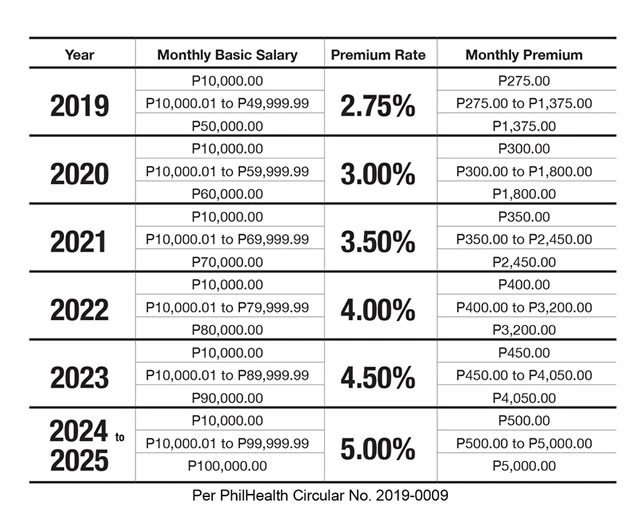
PhilHealth Contribution Table: Past Years (2019–2025)
Seeing how the rate climbed over time helps explain why your deduction today is noticeably higher than it was a few years ago.
|
Year |
Premium Rate |
Income Ceiling |
Notes |
|
2019 |
2.75% |
₱50,000 |
Starting rate under the UHC Law |
|
2020 |
3.00% |
₱60,000 |
First scheduled increase |
|
2021 |
3.50% |
₱70,000 |
Initially deferred, later implemented with retroactive collection |
|
2022 |
4.00% |
₱80,000 |
Increase applied retroactively to January |
|
2023 |
4.00% |
₱90,000 |
Scheduled hike to 4.5% suspended by presidential order |
|
2024–2025 |
5.00% |
₱100,000 |
Final scheduled rate reached |
|
2026 |
5.00% |
₱100,000 |
No change; confirmed as the final rate under the law |
The 2021 and 2023 increases were both delayed at different points due to economic relief measures, which is part of why so many members still ask whether the rate they’re seeing online is current. As of 2026, the government has confirmed there’s no further scheduled increase, and any future adjustment would need new legislation or a fresh PhilHealth circular.
How to Calculate Your PhilHealth Contribution
To compute your contribution, multiply your monthly basic salary or declared income by 5%, then divide the result by two if you’re an employed member sharing the cost with your employer.
Here’s the formula broken down for different member types, along with a sample computation for each.
Employed members: Monthly salary × 5% = total premium, then divide by 2 for your personal share.
Example: ₱25,000 salary × 0.05 = ₱1,250 total premium. You pay ₱625, and your employer pays ₱625.
Self-employed or voluntary members: Declared monthly income × 5% = your full contribution.
Example: ₱35,000 declared income × 0.05 = ₱1,750, paid entirely by you.
Below the salary floor: If your salary or income is ₱10,000 or less, your contribution is fixed at ₱500 per month regardless of the exact figure.
Above the salary ceiling: If your salary or income exceeds ₱100,000, your contribution is capped at ₱5,000 per month.
Voluntary and self-employed members are allowed to pay monthly, quarterly, semi-annually, or annually, depending on what fits their cash flow better. Just remember that the total amount due still follows the same 5% computation regardless of how often you choose to pay.
How to Pay PhilHealth Contribution
Employed members have their contributions automatically deducted and remitted by their employer, while voluntary, self-employed, and OFW members can Pay PhilHealth Online through the Member Portal, accredited banks, GCash, Maya, and other approved payment channels.
For members who need to pay on their own, here are the most common options available:

Online banking apps
From major Philippine banks with a bills payment feature for PhilHealth.
E-wallets
Such as GCash and Maya, which now support direct PhilHealth premium payments.
Payment centers
like Bayad Center, SM Bills Payment counters, and Robinsons Business Centers.
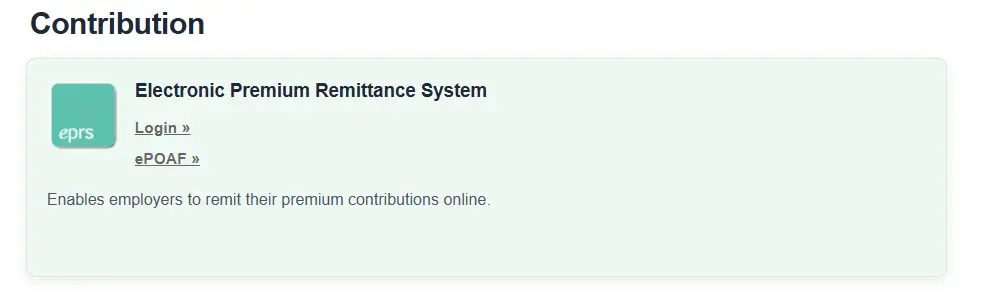
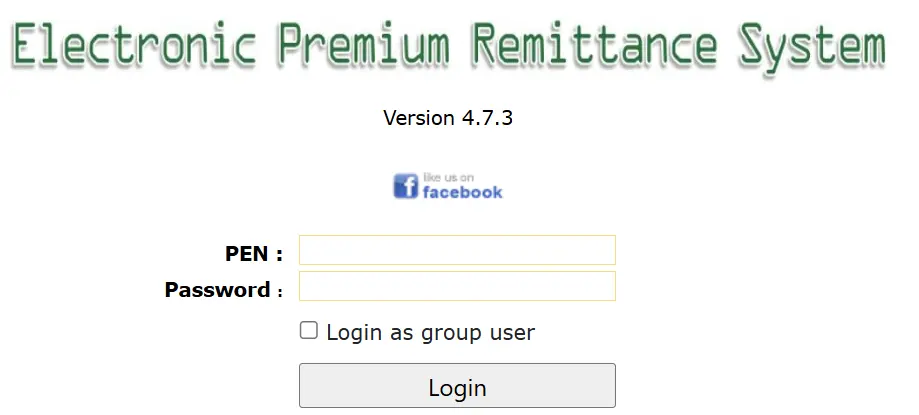
PhilHealth’s Electronic Premium Remittance System (EPRS)
For those who prefer generating an official payment reference before transacting.
Over-the-counter payment
At any PhilHealth branch, though this usually takes longer due to queues.
Whichever channel you choose, always keep your Statement of Premium Account or payment confirmation, since this becomes your proof in case a payment doesn’t reflect right away in the system. If you’re an OFW paying before deployment, check with your manning agency first, since some agencies handle an advance payment on your behalf as part of your pre-departure requirements.
How to Check Your PhilHealth Contribution Online
You can check your PhilHealth contribution online by logging into the PhilHealth Member Portal with your PIN and password, then viewing your Contribution History or Member Data Record.
Follow these steps for a smooth check:
If your online portal shows a discrepancy, such as a missing month despite an active payslip deduction, it’s best to raise this directly with your employer’s HR department first, since they might simply be behind on remittance rather than something wrong on your end.
How to Get a PhilHealth Certificate of Contribution
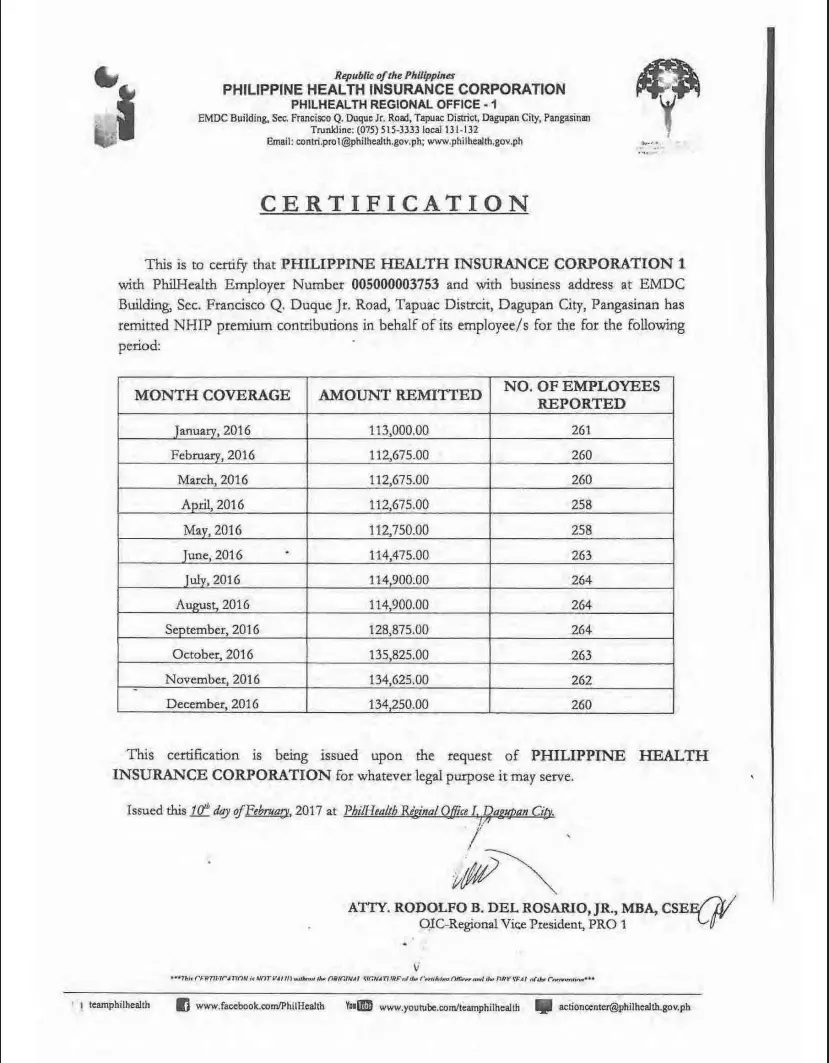
Many transactions, from loan applications to visa processing, ask for a Certificate of Contribution or Certificate of Premium Payment as proof of active membership. You can request this directly at any PhilHealth branch by presenting a valid ID and your PhilHealth Identification Number, or through the online portal if the digital request feature is available in your account.
Processing usually takes a few minutes at the branch if your records are complete and updated, though it can stretch longer if staff need to verify an old or incomplete contribution history.
Bring a written request letter if the branch requires one, and always double-check the exact wording your requesting institution needs, since some ask for a “Certificate of Contribution” while others specifically want a “Certificate of Premium Payment.”
What Happens If You Miss a Contribution?
Missing a contribution does not automatically cancel your membership, but it can suspend certain benefits until you settle the unpaid months, and employers who fail to remit face compounding interest and possible legal penalties.
For employers, sea-based OFWs, and
kasambahay accounts,
unpaid premiums typically accrue a 3%
monthly compounded interest
under existing PhilHealth rules.
For self-employed, voluntary, and land-based OFW members, missed payments can usually be settled within a short grace window without major complications, though benefits may be paused if there’s a significant gap when a claim is filed.
It’s worth noting that in 2026, the national government ordered PhilHealth to implement a one-time interest waiver covering missed employer contributions dating from July 2013 to December 2024.
Employers under this program can settle their backlog within a one-year window, with the interest rate reduced depending on how quickly they pay: a shorter payment term of one month qualifies for a full waiver, a two-to-six-month term carries a reduced 1% interest, and a seven-to-twelve-month term carries 2% interest instead of the usual 3% monthly compounding. This waiver applies only to the interest charges, not to the unpaid premiums themselves, so the original contribution amount still needs to be paid in full.
If you’re an employee and you suspect your employer hasn’t been remitting your share despite deducting it from your salary, this is a serious issue you should report to PhilHealth or the Department of Labor and Employment right away, since the deducted amount legally belongs to your contribution record and not to the company.
Common Mistakes to Avoid
Even long-time members run into avoidable issues that cause delays or unexpected costs. Watching out for these can save you a lot of hassle later.
Troubleshooting Contribution Problems
If your online portal shows missing months, start by gathering your payslips or payment receipts as proof, then visit or call your nearest PhilHealth branch to have the discrepancy corrected. For employed members, loop in your HR or payroll department immediately, since the fix often needs to happen on the employer’s remittance side rather than through your personal account. Self-employed and voluntary members who paid but don’t see it reflected should keep their official receipt or payment confirmation ready, since posting delays of a few banking days are common, especially with third-party payment centers. If a benefit claim gets denied due to insufficient contributions, ask the hospital’s PhilHealth desk or CARES officer whether you’re allowed to pay the deficit before discharge, since some cases permit this depending on timing and documentation.
What Your Contribution Actually Pays For
Your monthly premium funds a shared pool that covers a wide set of health benefits once you or your dependents need them. This includes inpatient hospital confinement, a range of surgical and non-surgical procedures, maternity care for normal and cesarean deliveries, and outpatient packages like the Konsulta primary care program, recently rebranded as the Yaman ng Kalusugan Program. Most hospital reimbursements are paid using official PhilHealth Case Rates, which determine how much PhilHealth covers for specific illnesses, surgeries, and medical procedures.
It also supports the Z Benefits package for catastrophic illnesses such as certain cancers, kidney transplants, and open-heart surgery, along with dialysis coverage for chronic kidney patients. Seeing exactly where the money goes can make the monthly deduction feel less like a random cut from your paycheck and more like an investment in coverage you might genuinely need someday.
Tips for Managing Your PhilHealth Contributions
Frequently Asked Questions

I’m Dayon, and I run PhilHealthPH.com. I got tired of confusing, outdated instructions every time I had to deal with PhilHealth online, so I started writing the guides I wished existed — clear, current, and focused on actually getting the task done. Everything here is checked against PhilHealth’s official site and updated whenever their process changes.