
Quick Answer
PhilHealth benefits cover a wide range of medical costs for members and their qualified dependents, including hospitalization, maternity care, outpatient consultations, catastrophic illness treatment through the Z Benefits Package, and primary care services under YAKAP. Coverage is deducted directly from your hospital or clinic bill at accredited facilities, so in most cases you don’t pay PhilHealth’s share out of pocket at all.
What you actually receive depends on your membership category, how current your contributions are, and which facility you’re admitted to. This article breaks down every major benefit, who qualifies, and the steps that keep your claim from getting stuck.
What Are PhilHealth Benefits?
PhilHealth benefits are the actual healthcare services and financial coverage members receive in exchange for their monthly contributions. Rather than reimbursing your entire bill, PhilHealth pays a fixed case rate for each diagnosis or procedure, Every illness and medical procedure has its own approved PhilHealth case rate, which determines how much of your hospital bill PhilHealth will cover. Automatically deducted from what the hospital charges you. This applies whether you’re an employed member, a voluntary contributor, an OFW, or an indigent member subsidized by the government.
The benefit system covers three broad categories: inpatient care for hospital confinement, outpatient care for consultations and same-day procedures, and specialized packages for expensive or life-threatening conditions. PhilHealth has significantly raised its case rates across several packages over the past two years, particularly maternity care, which makes understanding current coverage more important than relying on older figures still circulating online.
Who Can Avail of PhilHealth Benefits?
Every active PhilHealth member and their qualified dependents can avail of benefits, regardless of whether they’re employed, self-employed, an OFW, indigent, or a senior citizen. Coverage extends to a legal spouse, children under 21, and parents aged 60 and above who are properly listed on the member’s records.
The word “active” carries real weight here. Members with lapsed contributions, particularly voluntary and self-employed members who pay on their own schedule, can find claims denied even though they hold a PhilHealth number. Keeping your Member Data Record (MDR) updated and payments current is what actually keeps the benefit usable when you need it.
If you need to catch up on missing premiums before using your benefits, you can pay PhilHealth online.
How Many Contributions Do You Need to Qualify?
Most PhilHealth benefits, including maternity and general hospitalization, require at least nine months of contributions within the twelve months immediately before availment. Indigent, senior citizen, and lifetime members generally don’t carry this same requirement since their coverage is subsidized differently.
This nine-month rule is easy to overlook, especially among first-time voluntary members who assume registering alone is enough. If you’re planning a hospital admission or expecting to give birth soon, checking your contribution history through the Member Portal ahead of time tells you exactly where you stand.
Learn how PhilHealth contributions work, how they’re calculated, and how to check your payment history before applying for benefits.
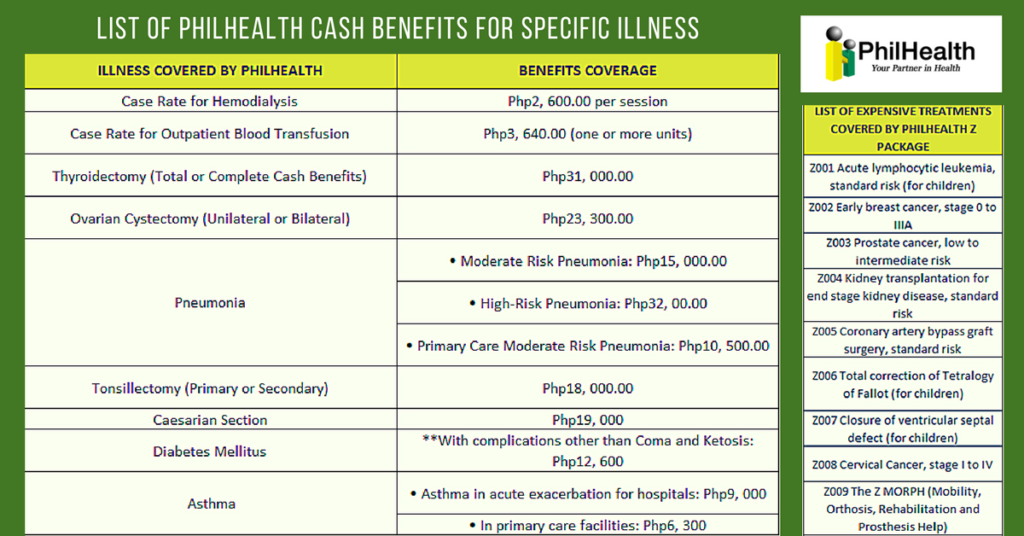
The Full List of PhilHealth Benefits
PhilHealth organizes its coverage into several major categories, each addressing a different kind of medical need.
|
Benefit Category |
What It Covers |
|
Inpatient (Hospitalization) |
Room and board, medicines, lab tests, and professional fees for confinement at accredited hospitals |
|
Outpatient / Primary Care under the PhilHealth YAKAP Program |
Free consultations, essential medicines, lab tests, and cancer screenings through an assigned clinic |
|
Maternity Care |
Normal delivery, cesarean section, prenatal visits, postnatal visits, and newborn care packages |
|
Z Benefits |
Case rates for catastrophic illnesses such as cancer, kidney transplant, and open-heart surgery |
|
Dialysis |
Coverage for hemodialysis sessions for members with chronic kidney disease |
|
Senior Citizen Coverage |
Lifetime, premium-free membership with access to the same benefit packages as other members |
|
PWD Benefits |
Coverage under the National Household Targeting System or LGU-sponsored programs, plus access to rehabilitation packages |
|
Death Benefit |
A cash benefit paid to beneficiaries for members who die under specific conditions, mainly linked to work-related programs coordinated with other agencies |
Not every category applies automatically. Z Benefits and dialysis coverage require a doctor’s diagnosis and pre-authorization before PhilHealth applies the case rate, while primary care under YAKAP requires you to register and complete an initial clinic visit first.
PhilHealth Maternity Benefits (2026 Rates)
As of the April 2026 expansion, PhilHealth covers ₱29,000 for normal spontaneous delivery in hospitals, ₱14,000 in infirmaries or primary care facilities, and ₱58,000 to ₱62,000 for cesarean sections depending on the hospital’s level. Prenatal coverage was also doubled to eight visits, including vaccines and lab tests, and three postnatal follow-up visits are now covered for the first time.
These rates mark a substantial jump from the previous ₱9,750 for normal delivery and ₱37,050 for cesarean section. To qualify, a member generally needs nine months of contributions within the twelve months before delivery, or qualify as a dependent of someone who does. PhilHealth deducts its share directly from your hospital bill rather than paying cash, so if your total bill comes in lower than the case rate, you’re only charged the deduction, not the full package amount.
|
Delivery Type |
Facility Level |
2026 Coverage |
|
Normal Delivery (NSD) |
Hospital |
₱29,000 |
|
Normal Delivery (NSD) |
Infirmary / Primary Care |
₱14,000 |
|
Cesarean Section |
Level 1 Hospital |
₱58,000 |
|
Cesarean Section |
Level 2–3 Hospital |
₱62,000 |
|
Newborn Care Package |
All levels |
₱5,000 |
Z Benefits: Coverage for Catastrophic Illnesses
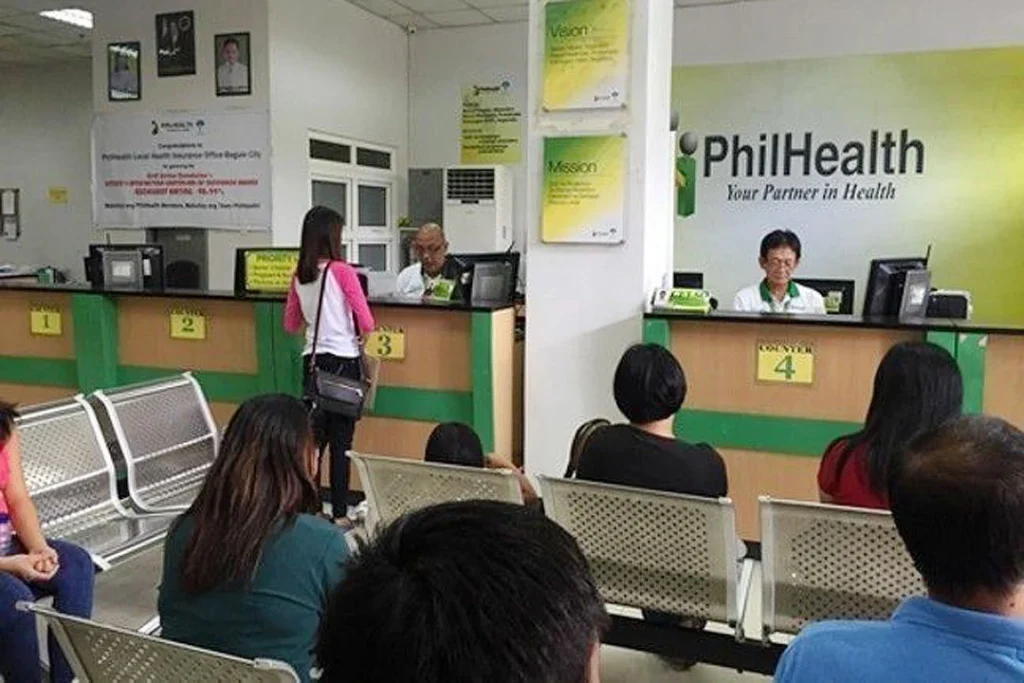
The Z Benefits Package covers members diagnosed with catastrophic, high-cost illnesses such as breast cancer, cervical cancer, leukemia, kidney transplant, and open-heart surgery, with coverage that can exceed ₱1 million per case depending on the condition. The “Z” refers to zero co-payment for basic ward accommodations at accredited facilities, meaning no additional out-of-pocket cost for the covered treatment itself.
Each condition under the Z Benefits list has its own fixed case rate, and these amounts have grown substantially breast cancer coverage, for example, rose from ₱100,000 to as much as ₱1.4 million as PhilHealth expanded funding for targeted therapy. Not every hospital is accredited to provide Z Benefits, so members diagnosed with a qualifying illness should ask their doctor early about pre-authorization and which nearby facilities are contracted for that package. Upgrading to a private room or requesting services outside the standard package still comes with out-of-pocket charges, even under Z Benefits.
Benefits for Senior Citizens, PWDs, and Dependents
Senior citizens aged 60 and above receive lifetime, premium-free PhilHealth coverage under the law, meaning they access the same benefit packages as other members without paying monthly contributions once activated. Persons with disabilities may qualify for subsidized coverage through local government programs, and PhilHealth has also expanded packages for physical medicine, rehabilitation therapy, and assistive mobility devices in recent years.
Dependents, including a legal spouse, children under 21, and qualifying parents, are covered under the principal member’s contributions without needing to register or pay separately, as long as they’re properly listed on the member’s records.

How to Avail of PhilHealth Benefits
- Confirm your membership is active by checking your contribution history through the PhilHealth Portal guide before you need the benefit.
- Choose an accredited facility. Only PhilHealth-accredited hospitals, clinics, and Z Benefit centers can apply your deduction automatically.
- Present your PhilHealth number or MDR upon admission, along with a valid ID.
- Let the facility process the deduction directly. For standard hospitalization and maternity cases, the hospital files the claim on your behalf.
- Ask about pre-authorization for Z Benefits or dialysis, since these packages typically require doctor approval before treatment begins.
Most members never need to submit paperwork to PhilHealth directly, since accredited facilities handle claims filing as part of the auto-deduction process.
How to Claim Benefits If You Paid Out of Pocket
If you were admitted at a non-accredited facility, gave birth abroad, or otherwise paid the full bill yourself, you can file a reimbursement claim directly with PhilHealth within 60 days of discharge. This requires official receipts, a completed claim form, and your MDR or proof of active membership.
Reimbursement claims take longer than the automatic deduction most members experience at accredited hospitals, and not every expense qualifies for a full refund. Filing as soon as possible after discharge, rather than waiting close to the 60-day cutoff, gives PhilHealth more room to process your claim.
Timeline: How Long Does Claiming Take?
For confinements at accredited hospitals, the case rate deduction typically appears on your final bill before discharge, since the facility processes it as part of admission. Reimbursement claims filed directly with PhilHealth generally take several weeks to a few months, depending on documentation completeness and current claims volume.
Because in-hospital deductions happen automatically, most members experience the “processing time” as instant, since it’s already reflected before they pay. It’s the manual, member-filed claims that carry the longer wait, which is why sticking to accredited facilities whenever possible saves both time and paperwork.
What’s Not Covered
PhilHealth benefits don’t extend to purely cosmetic or aesthetic procedures, since coverage is limited to medically necessary treatment. Private room upgrades, elective services outside a benefit package’s defined scope, and certain dental procedures like braces, veneers, and teeth whitening also fall outside covered benefits.
Some catastrophic conditions, including lung cancer as of this writing, remain outside the current Z Benefits list despite public calls to include them, so confirming coverage for a specific diagnosis with your doctor or PhilHealth directly is safer than assuming it’s included.
Common Mistakes That Delay or Deny Claims
Assuming registration alone guarantees eligibility
Many members don’t realize the nine-month contribution rule applies until a claim is already denied.
Getting admitted to a non-accredited facility
Without accreditation, the automatic deduction doesn’t apply, forcing members into a slower reimbursement process.
Missing the 60-day filing window
Reimbursement claims submitted after the deadline are much harder to process, if accepted at all.
Not updating civil status or dependents
.A maternity claim filed under an outdated MDR can stall if your marital status or dependent list doesn’t match PhilHealth’s records.
Skipping pre-authorization for Z Benefits
Some members only ask about eligibility after treatment has started, which can delay case rate approval.
Tips to Maximize Your PhilHealth Benefits
Check your contribution history a few months before any planned procedure, especially childbirth, so you have time to catch up on payments if needed. Confirm a hospital or clinic’s accreditation status before admission rather than after, since this single detail determines whether your benefit applies automatically.
Keep your MDR and dependent records updated year-round instead of only when a claim is imminent, since outdated records are a common reason claims get questioned. For high-cost diagnoses, ask your doctor about Z Benefits or dialysis pre-authorization as early as possible, since these packages depend on approval before treatment, not after the bill is due.
Frequently Asked Questions
Final Thoughts
PhilHealth benefits genuinely stretch further than most members realize, especially after the recent maternity and Z Benefit increases, but the amount you receive depends heavily on staying current with contributions and choosing accredited facilities whenever you can.
Checking your eligibility ahead of a planned procedure, rather than discovering a gap during an emergency, is what separates a smooth claim from a stressful one. When in doubt about a specific condition or package, a quick call to PhilHealth or a conversation with your doctor about pre-authorization settles it faster than guessing.

I’m Dayon, and I run PhilHealthPH.com. I got tired of confusing, outdated instructions every time I had to deal with PhilHealth online, so I started writing the guides I wished existed — clear, current, and focused on actually getting the task done. Everything here is checked against PhilHealth’s official site and updated whenever their process changes.