
Quick Answer
PhilHealth hospitalization coverage works through automatic deductions applied to your final hospital bill at accredited facilities, based on a fixed case rate for your specific diagnosis. You don’t file paperwork or wait for reimbursement in most situations the hospital handles the claim, and the deduction already appears on your Statement of Account before you pay.
How much this actually reduces your bill depends on your diagnosis, the hospital’s pricing, and whether you’re in a public or private facility. A government hospital ward admission can sometimes cost you nothing beyond the case rate, while the same diagnosis at a private tertiary hospital might leave a sizable remaining balance. This article walks through exactly how the deduction works, what to prepare, and how to avoid paying more than necessary.
How PhilHealth Hospitalization Coverage Works
PhilHealth covers hospitalization through a case rate system, where every diagnosis or procedure has a fixed peso amount that gets deducted from your total hospital bill before you’re discharged. This amount is bundled to cover room and board, medicines, lab tests, and the professional fees of your attending doctors, all in one deduction rather than separate itemized claims.
Accredited hospitals apply this deduction automatically once you present your PhilHealth details at admission. You don’t need to pay first and wait for a refund unless you were treated at a non-accredited facility or something in your documentation didn’t go through properly. The case rate itself doesn’t change based on where you’re admitted, but it stretches further at hospitals with lower baseline charges than at large private tertiary centers.
Before admission, you can log in to the PhilHealth Portal to verify your membership information and contribution records.
How Much Does PhilHealth Actually Cover?
PhilHealth covers a fixed case rate amount specific to your diagnosis, not a flat percentage of your total bill, so the actual percentage covered varies widely depending on the hospital and how complex your case is. At a public hospital’s basic ward, this can mean 100 percent coverage for routine conditions, while at a private hospital the same case rate might cover anywhere from 20 to 60 percent of the total charges.
This is the part that surprises a lot of first-time patients. PhilHealth isn’t designed to pay “70 percent of hospital bills” or any similar blanket figure it pays a set amount per condition, and your remaining balance depends entirely on how much the hospital charges beyond that. A patient admitted for pneumonia at a provincial hospital and a patient admitted for the same diagnosis at a premium Metro Manila hospital will walk away with very different out-of-pocket totals, even though PhilHealth’s contribution was identical.
|
Hospital Type |
Typical Coverage Impact |
|
Public hospital, basic ward |
Often covers the full bill for routine conditions, especially with No Balance Billing |
|
Public hospital, private/semi-private room |
Case rate applies, but room upgrade charges are out of pocket |
|
Private hospital, Level 1–2 |
Case rate typically covers a moderate share of the bill |
|
Private hospital, Level 3 tertiary |
Case rate often covers a smaller share due to higher baseline charges |
Government vs. Private Hospital: What Changes
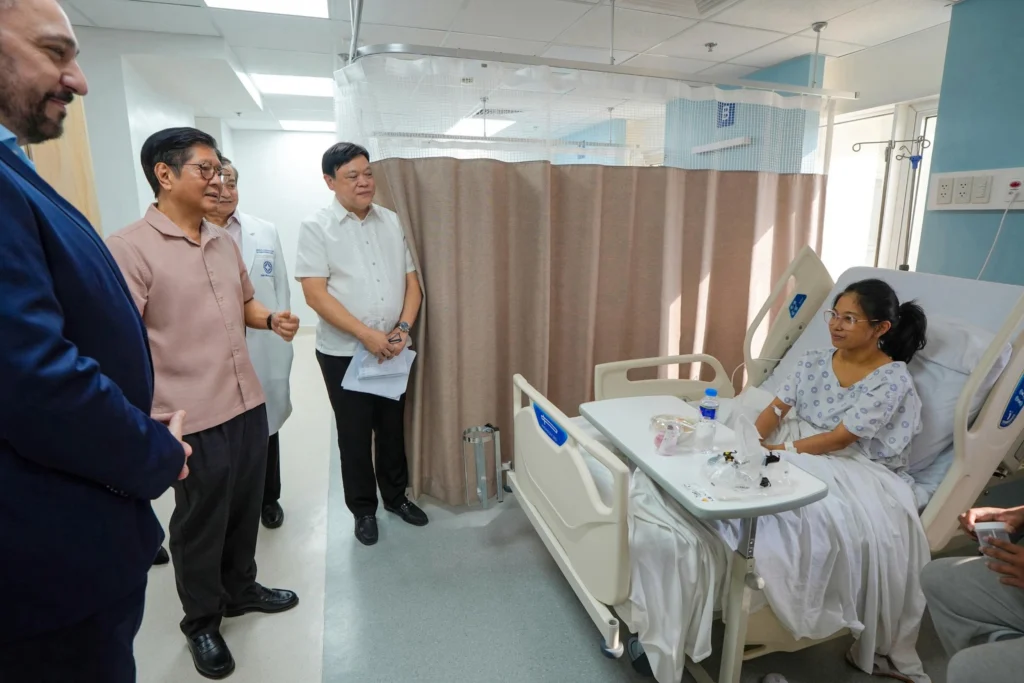
The case rate amount PhilHealth pays stays exactly the same whether you’re admitted to a government or private hospital for the same diagnosis. What changes is the hospital’s own pricing structure, since private hospitals generally charge significantly more for room and board, supplies, and professional fees than public facilities do. This is why the same case rate can feel like it “covers everything” in one setting and barely makes a dent in another.
Public hospitals also extend No Balance Billing (NBB) to qualified members, particularly indigent, sponsored, and certain other categories, when admitted to the basic ward. Under NBB, the member pays nothing beyond the case rate for that specific condition. Private hospitals generally don’t offer NBB, so even indigent members admitted to a private facility should expect some out-of-pocket cost unless the specific hospital has a special arrangement.
Requirements for Using PhilHealth During Hospitalization
A valid PhilHealth number or Member Data Record (MDR)
presented at the admitting section.
A valid government-issued ID
used to confirm your identity against your PhilHealth record.
Proof of active membership
particularly important for voluntary, self-employed, and OFW members whose contributions need to be current.
A completed PhilHealth Claim Form 1 (CF1)
usually provided by the hospital’s PhilHealth desk during admission.
Documentation for dependents
such as a marriage certificate or birth certificate, if you’re using coverage under a principal member rather than your own.
Bringing photocopies of these documents in addition to the originals saves time, since some hospitals require both for their records.
Hospital confinement is just one part of the complete PhilHealth Benefits available to qualified members and dependents.
Step-by-Step: How to Use PhilHealth in the Hospital
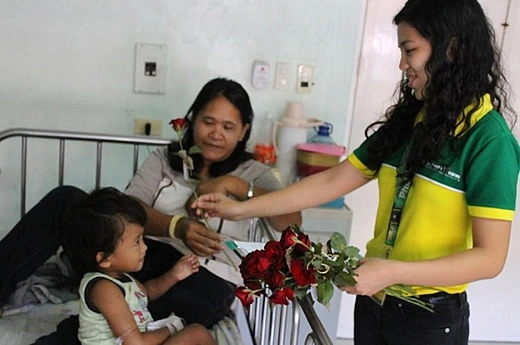
Most members never need to submit anything to PhilHealth directly, since the hospital files the claim on your behalf as part of standard discharge processing. After receiving treatment, you may also need to understand the PhilHealth Claim process if reimbursement or additional documentation is required.
Senior Citizens and Indigent Members in Private Hospitals
Senior citizens and indigent members can use PhilHealth at private hospitals, but the automatic full-coverage benefit under No Balance Billing generally only applies at public facilities. At a private hospital, both groups still receive the standard case rate deduction, though any charges beyond that amount become their responsibility unless the hospital has a specific subsidy arrangement.
Senior citizens aged 60 and above hold lifetime, premium-free PhilHealth membership and access the same case rates as other members. Indigent members, sponsored through DSWD or LGU programs, are eligible for the same case rate coverage at private hospitals, though they should confirm with the admitting section whether any additional discount or senior citizen deduction applies on top of the PhilHealth benefit, since these are separate programs that can sometimes be combined.
How to Find PhilHealth-Accredited Hospitals
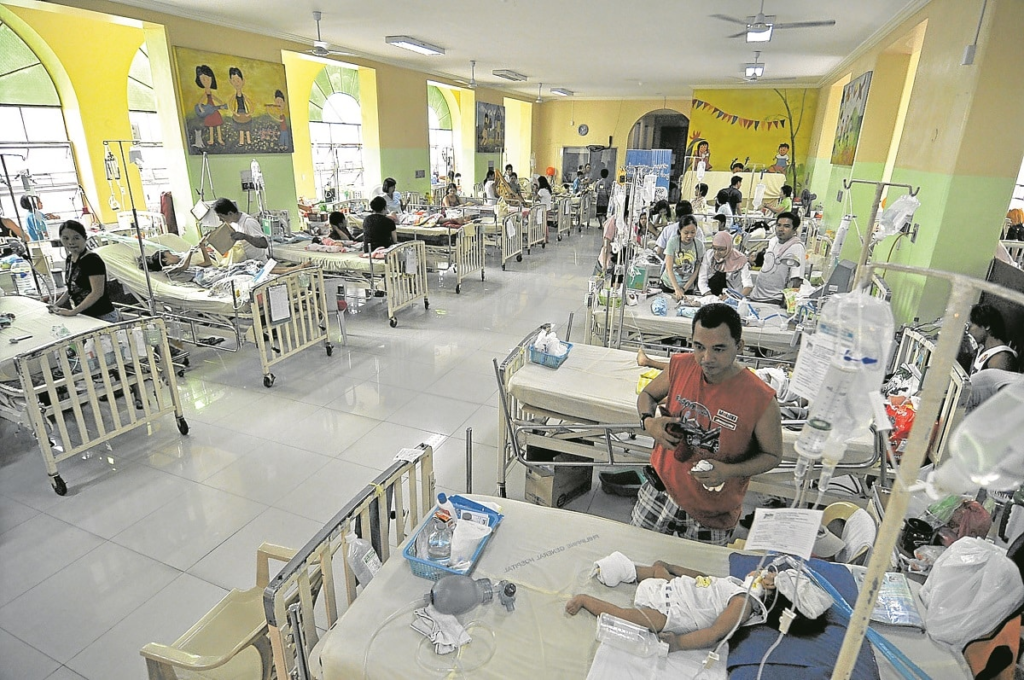
Not every hospital or clinic in the Philippines is PhilHealth-accredited, and admission to a non-accredited facility means the automatic deduction won’t apply.
PhilHealth maintains a list of accredited hospitals searchable through its official website, and most hospitals also display their PhilHealth accreditation status at the admitting or billing section.
If you’re planning a non-emergency admission, confirming accreditation status ahead of time, either by calling the hospital directly or checking PhilHealth’s official list, prevents an unpleasant surprise at discharge.
How to Reimburse a Hospital Bill You Paid Out of Pocket
If you were admitted to a non-accredited facility or the automatic deduction wasn’t applied for another reason, you can file a reimbursement claim directly with PhilHealth within 60 days of discharge. This requires official receipts, a completed claim form, and proof of active membership submitted to a PhilHealth branch.
Reimbursement claims take longer to process than the instant deduction most members experience at accredited hospitals, often several weeks depending on documentation completeness.
Filing as early as possible after discharge, rather than waiting near the 60-day cutoff, gives PhilHealth more room to review your claim before the deadline becomes an issue.
Common Mistakes That Increase Your Out-of-Pocket Cost
Troubleshooting a Rejected or Confusing Deduction
If your Statement of Account doesn’t reflect the PhilHealth deduction you expected, start by asking the hospital’s PhilHealth desk directly rather than the general billing counter, since they can pull up the specific reason from their system.
Common causes include an inactive contribution record, a documentation gap in your CF1, or admission to a facility that isn’t accredited for your specific diagnosis or procedure.
If the hospital can’t resolve it on the spot, PhilHealth’s Corporate Action Center can look into the claim directly, so keep your MDR, CF1 copy, and Statement of Account on hand when you follow up.
Tips to Lower Your Hospital Bill With PhilHealth
Confirm your membership is active and your contributions are current before any planned hospitalization, especially if you’re a voluntary or self-employed member.
Choose a basic ward at a public hospital when the situation allows, since this is where PhilHealth coverage stretches the furthest, particularly under No Balance Billing. Ask about senior citizen or PWD discounts separately from your PhilHealth deduction, since these government benefits often stack rather than replace one another.
Keep a folder of your PhilHealth documents, MDR, and past Statements of Account, so you’re not scrambling to locate them during an unplanned admission.
Frequently Asked Questions
Final Thoughts
Using PhilHealth for hospitalization comes down to two things: making sure your membership is active before you need it, and understanding that the benefit is a fixed case rate rather than a percentage discount. Public hospitals, especially basic wards under No Balance Billing, stretch that coverage the furthest, while private hospitals will usually still leave a balance to settle. Informing the hospital about your PhilHealth coverage right at admission, rather than waiting until the bill is already finalized, is the single habit that keeps the process smooth from start to discharge.

I’m Dayon, and I run PhilHealthPH.com. I got tired of confusing, outdated instructions every time I had to deal with PhilHealth online, so I started writing the guides I wished existed — clear, current, and focused on actually getting the task done. Everything here is checked against PhilHealth’s official site and updated whenever their process changes.