
The PhilHealth maternity benefit currently covers ₱29,000 for normal spontaneous delivery and ₱58,000 to ₱62,000 for cesarean section, following the expansion that took effect April 30, 2026. To qualify, most members need at least nine monthly contributions within the twelve months before delivery, and the hospital typically deducts the benefit directly from your bill at a PhilHealth-accredited facility.
This is a significant jump from the older ₱9,750 and ₱37,050 rates many members still remember, so budgeting based on outdated figures is worth revisiting. The rest of this article covers what’s included, who qualifies, and how to claim if something doesn’t go through automatically.
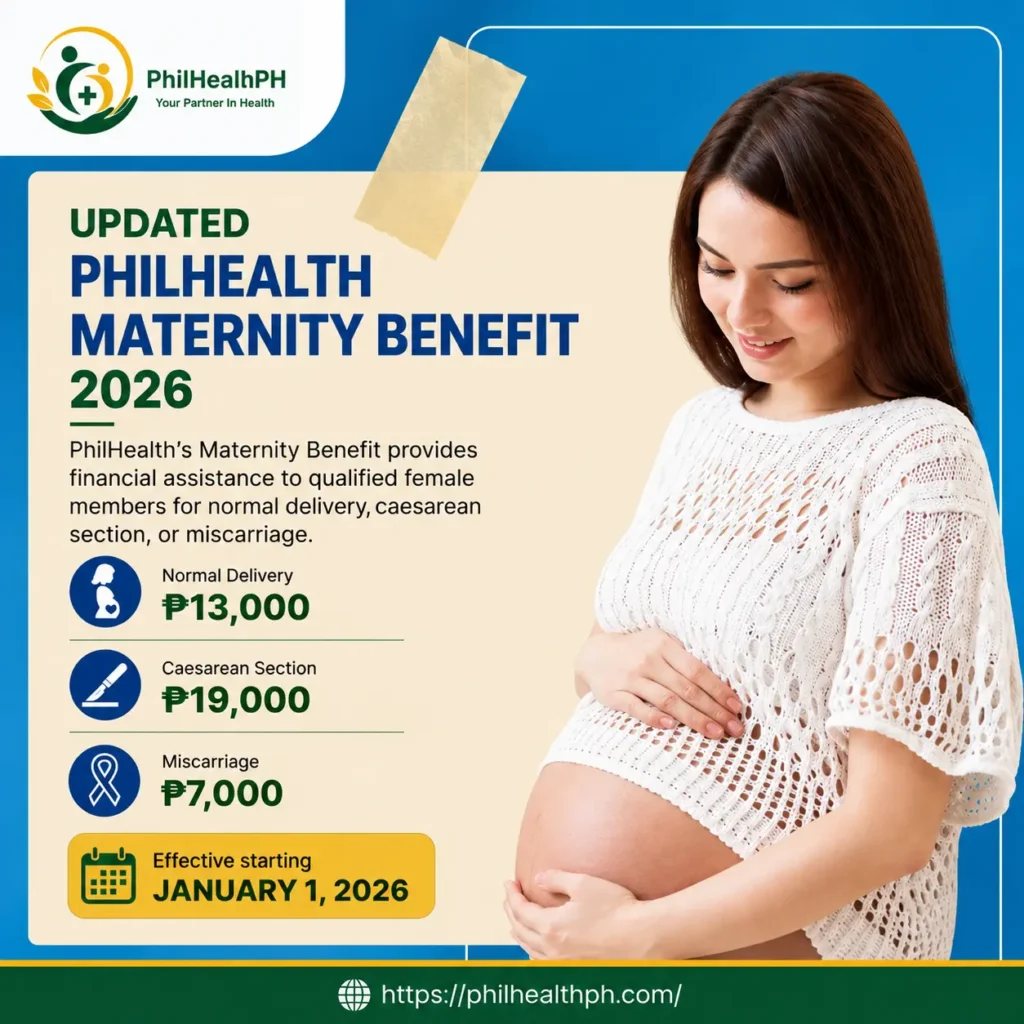
How Much Is the PhilHealth Maternity Benefit in 2026?
As of the April 30, 2026 expansion, PhilHealth covers ₱29,000 for normal spontaneous delivery at accredited hospitals, and ₱58,000 to ₱62,000 for cesarean section depending on the hospital’s classification level. This replaced the previous rates of ₱9,750 for normal delivery and ₱37,050 for CS.
|
Delivery Type |
2026 Coverage |
|---|---|
|
Normal Spontaneous Delivery (hospital) |
₱29,000 |
|
Normal Spontaneous Delivery (infirmary/primary care facility) |
₱14,000 |
|
Cesarean Section (Level 1 hospital) |
₱58,000 |
|
Cesarean Section (Level 2–3 Hospital) |
₱62,000 |
|
Newborn Care Package |
Around ₱4,425 |
These figures apply to deliveries on or after April 30, 2026; earlier deliveries used the older rates, even if discharge happened afterward. Since PhilHealth pays a fixed amount rather than a percentage of your bill, charges beyond this coverage remain your responsibility, particularly at private hospitals with higher baseline pricing.
What’s Included Beyond Delivery
The 2026 expansion didn’t just raise the peso amount, it also widened what the benefit covers around delivery. Prenatal coverage doubled from four to eight visits, now including routine pregnancy vaccines and standard laboratory tests like CBC, urinalysis, and blood typing.
Three postnatal follow-up visits are also covered for the first time, addressing what health officials had flagged as a major gap, since many mothers previously received strong prenatal and delivery care but little structured follow-up afterward.
The newborn care package runs alongside the mother’s claim, covering newborn screening, hearing tests, and essential interventions performed right after birth. If complications require the baby to be admitted to a neonatal intensive care unit, that follow-up care is typically billed and processed separately.
Who Qualifies for the Maternity Benefit?
Under the Universal Health Care Act, every active PhilHealth member and their qualified dependents are eligible for maternity coverage, regardless of civil status. For self-employed, voluntary, and OFW members, eligibility specifically requires at least nine monthly contributions within the twelve months before delivery, often called the “9-month rule.”
Employed members generally qualify as long as their employer has been remitting contributions properly, without the same fixed monthly count applying. Senior citizens and lifetime members are automatically eligible without needing to track ongoing contributions.
If you’re a dependent, such as the wife of an employed husband, you can claim under his membership as long as you’re properly declared on his Member Data Record before delivery.
Requirements to Claim
A valid PhilHealth number or MDR, either your own or the principal member’s if you’re claiming as a dependent.
At least nine months of contributions within the preceding twelve months, if you’re self-employed, voluntary, or an OFW member.
Proof of dependent status, such as a marriage certificate, if claiming under a spouse’s membership.
A valid government-issued ID, presented at admission.
Claim Form 1 and Claim Form 2, if you’re filing for reimbursement rather than relying on automatic hospital deduction.
Official receipts and Statement of Account, only needed if you paid out of pocket and are filing for reimbursement.on.
Confirming your contribution status through the Member Portal a few months before your due date gives you time to catch up on payments if there’s a gap, rather than discovering the shortfall at admission.
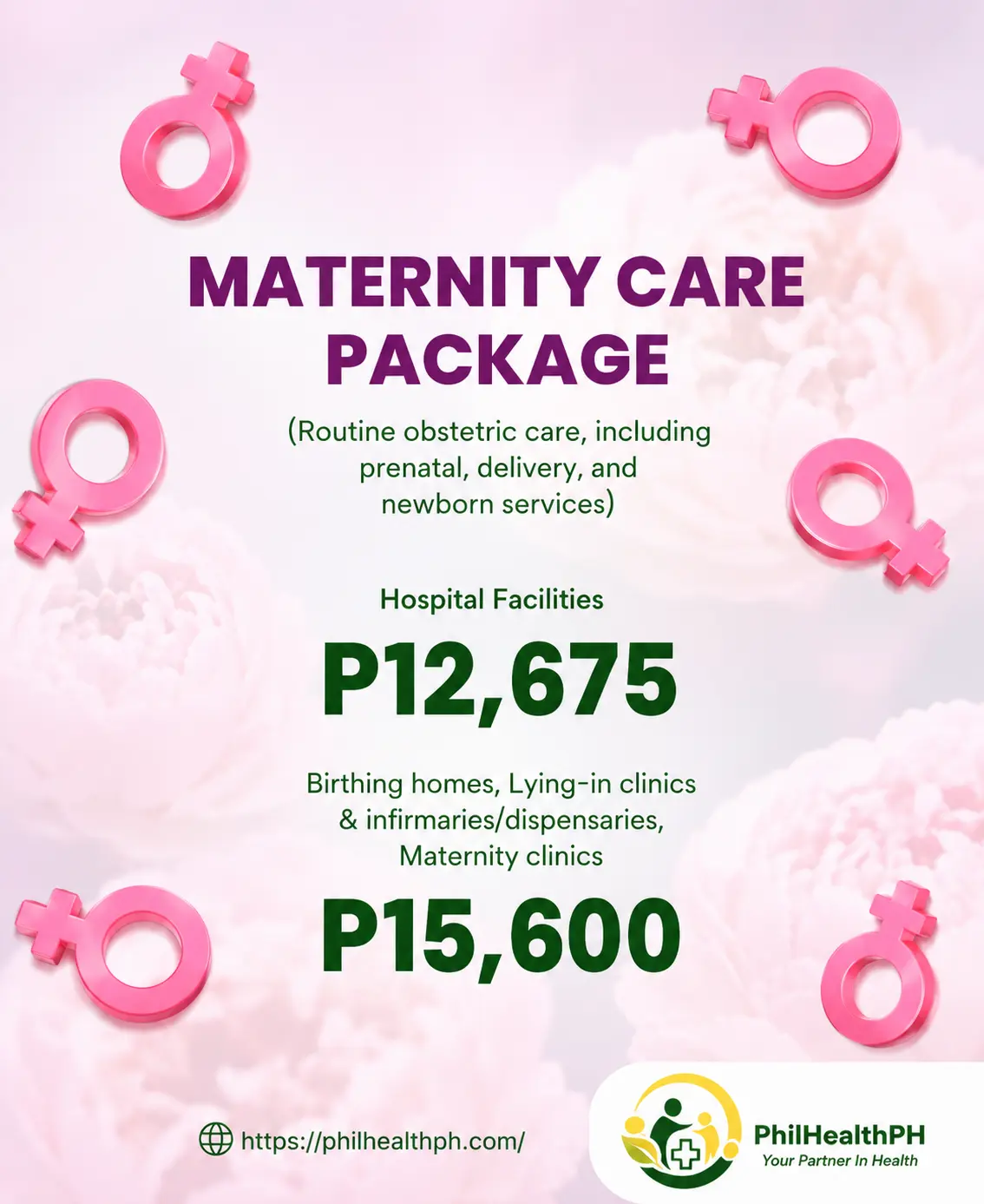
Step-by-Step: How to Avail of the Benefit

Check your PhilHealth contribution history through the Member Portal well before your due date.

Choose a PhilHealth-accredited hospital or birthing facility, since not every private hospital automatically deducts the benefit.

Confirm your dependent status is updated if you’re claiming under a spouse’s membership rather than your own.

Present your PhilHealth number and valid ID at admission, letting the hospital’s PhilHealth desk verify your eligibility.

Deliver and let the hospital process the deduction, which should appear on your Statement of Account before discharge.

Settle any remaining balance beyond what the case rate covers.
Most maternity claims never require the mother to file anything personally, since accredited hospitals handle the deduction and paperwork as part of standard discharge.
Filing for Reimbursement If You Paid Out of Pocket
If you delivered at a non-accredited facility or paid the full bill without any PhilHealth deduction, you can file for reimbursement directly with PhilHealth within 60 calendar days of discharge. This requires Claim Form 1, Claim Form 2 signed by your attending physician or midwife, official receipts, and your MDR or proof of active membership.
Reimbursement takes noticeably longer than the instant deduction most members get at accredited hospitals, often several weeks depending on documentation completeness.
Filing as early as possible after discharge, rather than waiting close to the deadline, gives PhilHealth more room to process everything before the 60-day window closes. If you’re unfamiliar with the reimbursement process, the How to File a PhilHealth Claim guide walks you through the required forms, supporting documents, deadlines, and the complete claims procedure step by step.
Maternity Coverage for Dependents, OFWs, and Voluntary Members
A wife who isn’t a PhilHealth member herself can still claim maternity benefits under her husband’s coverage, provided she’s declared as a legal dependent on his MDR and his contributions are current. This is one of the more commonly misunderstood parts of the benefit, since some couples assume the wife needs her own separate membership to give birth with coverage.
OFWs giving birth in the Philippines follow the standard nine-month contribution rule if they’re the one delivering, while a male OFW’s dependent spouse can claim under his membership as long as she’s properly declared and his annual contributions are paid. Voluntary and self-employed members face the strictest version of the requirement, since there’s no employer automatically remitting on their behalf, making it important to track payment history well ahead of the due date.
If you need to update your contribution history before your due date, follow our How to Pay PhilHealth Online guide for a step-by-step walkthrough of the available payment methods and how to keep your membership active.
What About Miscarriage?
Miscarriage and related complications are generally covered under standard hospitalization case rates rather than the maternity delivery package itself, since a miscarriage doesn’t result in a live birth requiring a delivery-specific claim. The specific case rate depends on the diagnosis and any procedure required, such as a dilation and curettage, and follows the same contribution and accreditation rules as other inpatient claims. If you’re unsure which case rate applies to your specific situation, the hospital’s PhilHealth desk can confirm the correct code based on your diagnosis.
Common Mistakes That Delay a Maternity Claim
Troubleshooting
If your Statement of Account doesn’t reflect the expected maternity deduction, ask the hospital’s PhilHealth desk directly rather than the general billing counter. Common causes include an undeclared dependent status, lapsed contributions, or admission to a facility not accredited for maternity claims.
If the hospital can’t resolve it, PhilHealth’s Corporate Action Center can review the case directly, so keep your MDR, ID, and billing statements on hand when you follow up.
Tips for a Smooth Maternity Claim
Check your contribution history several months before your due date, giving yourself time to catch up if you’re short on the required nine months. Confirm your chosen hospital is PhilHealth-accredited and ask how they handle the maternity deduction before your delivery date arrives.
If you’re claiming as a dependent, update your MDR early rather than assuming marriage alone guarantees recognition in PhilHealth’s system. Keep photocopies of every document related to your pregnancy and delivery, since these come in handy whether your claim processes automatically or needs reimbursement filing.
Frequently Asked Questions
Final Thoughts
The 2026 increase makes PhilHealth’s maternity benefit genuinely more useful than it’s been in years, particularly with the added prenatal and postnatal visits that used to leave a real gap in coverage. Getting the full benefit still comes down to the basics: confirming your contributions are current, delivering at an accredited facility, and making sure your dependent status is properly declared well before your due date. When something doesn’t process automatically, filing quickly and keeping your documents organized is what keeps a reimbursement claim from becoming a second source of stress during an already demanding time.

I’m Dayon, and I run PhilHealthPH.com. I got tired of confusing, outdated instructions every time I had to deal with PhilHealth online, so I started writing the guides I wished existed — clear, current, and focused on actually getting the task done. Everything here is checked against PhilHealth’s official site and updated whenever their process changes.